Why AI Recommends Some SaaS Tools and Skips Others
Ask ChatGPT for a tool recommendation and you get one or two names. Here's the system behind which SaaS products get chosen, and why Google leaders don't always make the cut.
The useful question isn't why a given product isn't on the shortlist. It's how AI decides who is.
The system behind AI tool recommendations is more predictable than most teams assume. It runs on three signals, each behaving differently, each measurable. Once you know which signal is doing the work in your category, the fix stops feeling like a mystery.
How AI Builds a Tool Recommendation
Two steps happen inside every AI answer to a category question.
Retrieval. The AI system pulls a candidate set of content it might use to answer. This isn't the same as Google's ranking. Retrieval selects passages, not pages, and it favors content structured to be extracted cleanly.
Generation. The model reads those passages and constructs a response. This is where brand names get chosen. Two brands with equal retrieval presence can get very different generation treatment based on how confidently the model can name them.
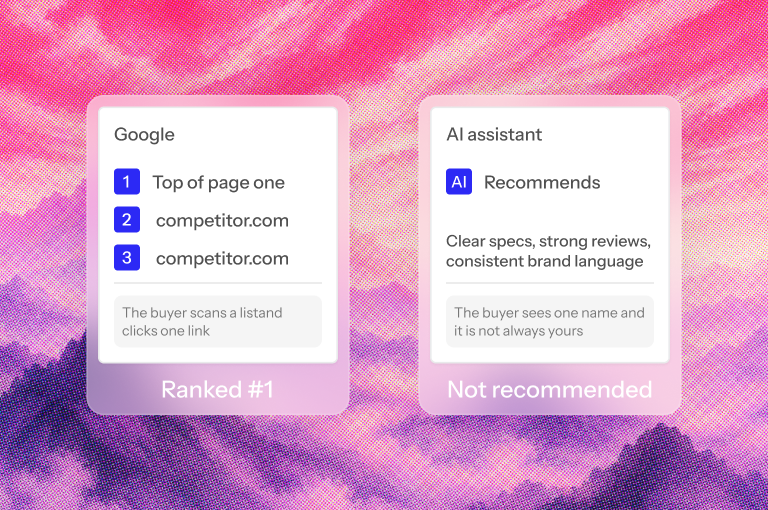
That's why category leaders on Google don't always show up in AI answers. They may be retrieved as source material without being named as a recommendation. Their content contributes to the answer while a competitor gets the citation.
The pattern to look for when reviewing an AI answer in your category: are the brands cited the same ones you'd expect from Google's top ten, or are they different? In most B2B categories we've checked, they're different.
Signal 1: Retrievability
For AI to name a product, it needs to be able to extract clean, specific statements about what the product does, who it's for, and what problem it solves.
The failure mode: pages that lead with a brand story, a tagline, or a category-level statement before getting to specifics. AI reads from the top of sections. If the first two hundred words are framing and the specifics come in paragraph four, the specifics don't get retrieved.
The fix is straightforward. Rewrite the opening of every product, category, and use case page to answer the buyer's question in the first two sentences. "Flozi is an AEO diagnostic platform for Webflow and Shopify sites. It shows you which pages AI is failing to retrieve and what to change." That kind of opening is retrievable. "We believe every brand deserves to be seen" is not.
Retrievability is the fastest signal to move. Rewrite openings, add FAQ blocks with FAQPage schema, use consistent product category language across every page. Most teams see movement in AI answers within one to three months of doing this cleanly.
Signal 2: Authority
Retrievability gets a product into the candidate pool. Authority determines whether it gets named.
AI builds a model of a brand from every piece of content it sees connected to that brand: product pages, blog posts, docs, integration pages, press mentions, third-party reviews. Consistency across all of it is the authority signal. Inconsistency dilutes it.
The common failure in SaaS: the homepage describes the product one way, the about page another way, the blog a third way, and the docs a fourth. Each surface is written by a different person at a different stage of the company. AI reads them all and builds a fuzzier brand model, which means it names the brand less confidently.
The fix is not more content. It's making existing content coherent. Every page should describe the product category, the target user, and the core value in the same terms. When AI reads five pages of a site and gets five slightly different descriptions, the brand doesn't get named. When it reads five pages and gets one description repeated with different depth, the brand gets named with confidence.
Authority takes longer to move than retrievability. Reworking positioning across a site is a two-to-six-month effort depending on site size. But it's the signal that separates products that "sometimes appear" in AI answers from products that always do.
Signal 3: Third-Party Presence
The signal most SaaS teams don't realize is running the show.
In a manual sample across five common SaaS categories (CRM, project management, email marketing, help desk, accounting), we ran the standard "best X for Y" query in ChatGPT and Perplexity and checked what got cited as source material. Every single citation came from a third-party site: Capterra, G2, Zapier's blog, EmailToolTester, The Digital Project Manager, Salesforce's own blog. Not one vendor's own page was cited across any of the five categories.
That result was consistent enough to change the mental model. In SaaS, AI's understanding of your category is being built from third-party comparison and review content, not from vendor content. Fixing your own pages improves your chances of being named. Getting represented accurately on the third-party sites AI cites determines whether you're in the candidate pool at all.
The fix here is a different kind of work. It involves auditing your presence on Capterra, G2, and TrustRadius (are your listings accurate, are your review counts competitive, are you in the right categories), getting represented in the category round-ups AI cites (identify which ones show up in AI answers for your category, then get in touch with the editors), and building comparison and alternatives pages on your own site that can serve as a corroborating source.
Third-party presence is the longest signal to move but it's where the leverage lives in most B2B categories. A single G2 category leader placement or a strong Zapier blog inclusion can shift AI answers materially.
Why These Are Three Different Problems
Retrievability, authority, and third-party presence require different kinds of work and different owners. Retrievability is a content and copy job. Authority is a positioning and consistency job. Third-party presence is a partnerships and listings job. In practice, most SaaS product teams end up owning all three, since none of it moves without someone tracking the diagnosis end to end.
Two brands with the same amount of AI visibility can have very different signal profiles. One might have strong retrievability and weak third-party presence. Another might have strong third-party presence and inconsistent authority. The fix for each is completely different.
Diagnosing which signal is thin before starting the work is the most important step. Rewriting product pages when the actual gap is a missing Capterra presence is expensive work that doesn't move the needle.
How to Diagnose Which Signal Is Thin
Two checks worth running before doing anything else.
Check 1: Run the actual queries. List the ten questions buyers in your category ask AI. Run them in ChatGPT, Perplexity, and Google AI Overviews. Note which brands appear, what's said about them, and what sources are cited. If your brand doesn't appear, look at what does: are those sources places you have a presence, or not?
Check 2: Compare your site to a competitor that does appear. Open a product page from a brand AI consistently names and compare it to your equivalent page. Look at the first two hundred words. Are they answering the buyer's question directly, or building to a point? Look at how each brand describes its category across the homepage, product pages, blog, and docs. Is the description consistent, or does it drift?
If AI isn't naming your brand in the queries buyers actually ask, one of the three signals is thin. The diagnostic is finding out which one.
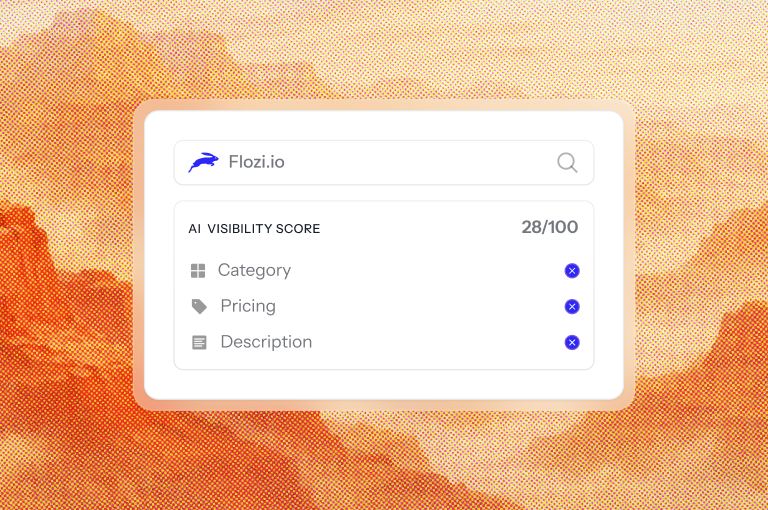
Flozi automates this. Connect your site and Flozi runs the queries, cross-references what's cited, and tells you which of the three signals is doing the least for your brand today, and which pages, positioning gaps, or third-party absences are the reason.
Get a free AEO diagnosis for your SaaS product.
Frequently Asked Questions
Why does ChatGPT name a competitor and not my product?
Usually because one of three signals is stronger for the competitor: retrievability (cleaner, more extractable product pages), authority (consistent brand description across every page and third-party source), or third-party presence (better representation on the review sites and comparison blogs AI cites for your category). Running the actual queries and comparing what's said reveals which one is doing the work.
Does ranking on Google help my product get recommended by AI?
Only partly. Google ranking signals overlap with retrievability, but AI selection also weighs brand consistency and third-party citations, neither of which is a Google ranking factor. Products that dominate Google for a category can still be absent from AI answers for that category if their third-party presence is thin.
How long does it take to see movement in AI answers?
Retrievability changes (rewriting page openings, adding FAQ schema) can show up in AI answers in one to three months. Authority changes (positioning consistency across the site) take three to six months. Third-party presence changes (getting cited on new comparison sites, improving Capterra or G2 standing) take three to nine months but move the most.
Which AI platforms should I be checking?
Start with ChatGPT and Perplexity, then add Google AI Overviews and Claude. The specific answers differ by platform but the underlying signals (retrievability, authority, third-party presence) apply to all of them, so a product that improves across those three signals sees movement in every AI system that cites web content.
Can a smaller SaaS out-rank a category leader in AI answers?
In narrow enough queries, yes. Category leaders often dominate head terms ("best CRM") because their brand authority is high, but they can be absent from more specific queries ("best CRM for a real estate team of five") because they haven't done the specific use-case content. Challengers win by owning specificity: use case, industry, team size, workflow.
Ready to run the diagnostic on your own site? Flozi checks AI visibility across ChatGPT, Perplexity, Google AI Overviews, and Claude, tells you which of the three signals is thin, and shows you the pages, positioning gaps, and third-party listings to fix first. Start your free diagnosis.
Uncover deep insights from employee feedback using advanced natural language processing.
Get your content health score across ChatGPT, Perplexity, Gemini & Claude in 60 seconds.
Blogs
.avif)