AEO as an Agency Service: How to Package, Price, and Sell
AI visibility is becoming a client conversation agencies can't avoid. Here's how to build AEO into a service you can actually deliver at scale, not just report on.
A client asks why enquiries are down despite good traffic. The account manager runs through the usual checks. Rankings are stable. Site speed is fine. Copy is solid. Nothing in the reports explains it.
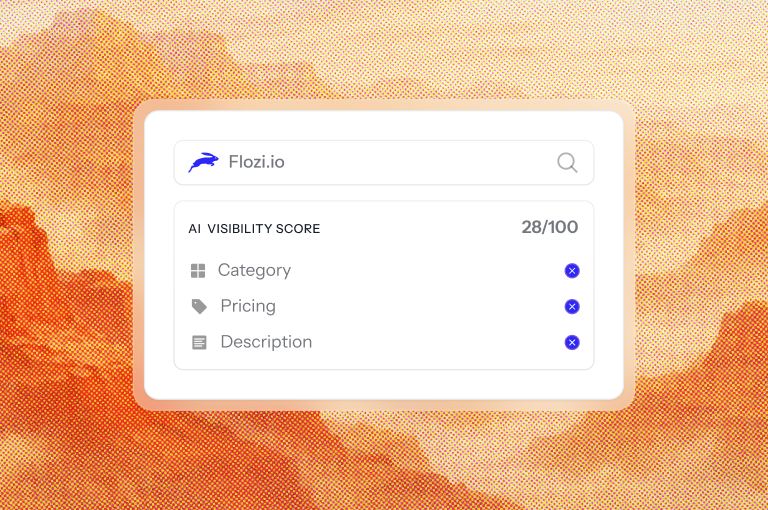
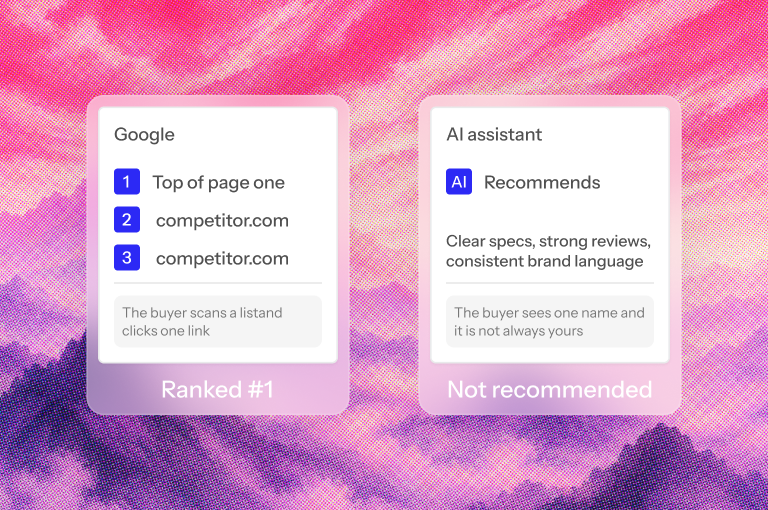
What's happening is upstream of everything agencies currently measure. Buyers in that client's category are asking ChatGPT or Perplexity for tool recommendations before they ever run a Google search. AI names one or two products. The buyer goes directly to those sites. The client wasn't one of them.
That gap is called AI visibility. For agencies, it is both a client retention problem and a new service opportunity. This guide covers how to turn it into the latter.
The Insight Most AEO Guides Get Wrong
The standard advice is to optimise your client's pages so AI can read them better. That matters. But it misses something more important.
When we checked how AI answers category queries across five different B2B SaaS verticals (CRM, project management, email marketing, help desk software, and accounting tools), a pattern emerged that changes the shape of the service entirely. Across all five categories, not a single vendor's own page was cited as a source. Every citation came from a third-party comparison or review site: Capterra, Zapier, The Digital Project Manager, EmailToolTester.
Vendor names got recommended. Vendor content didn't get cited.
This means that for most clients, optimising their own site is necessary but not sufficient. The source AI trusts is often a review or comparison page that the client doesn't control. Getting a client represented accurately and favourably on the platforms AI already cites in their category is as important as any on-site work.
For agencies, that expands the service scope significantly, and makes the work harder to replace with a self-serve tool.
Which Clients Are the Right Fit
Not every client has an AI visibility problem worth fixing. The ones that do share a few characteristics.
Research-heavy buyer journeys. B2B SaaS, professional services, enterprise software, fintech. Categories where buyers ask comparison questions and read three articles before booking a demo. If the buying decision takes weeks, AI is almost certainly in the research process.
Competitive categories. If a client has two or three well-funded competitors, those competitors are likely showing up in AI answers. The more contested the category, the more the shortlisting dynamic matters.
Established content and decent domain authority. AEO work compounds on top of existing credibility. A client with no content and no backlinks needs foundational SEO work before AI visibility becomes the priority.
Clients already asking "why are our leads down." This is the clearest signal. The problem is already live. The conversation is already happening. The agency just needs to give it a name and a solution.
How to Surface It in a Client Conversation
The mistake is leading with "AEO" or "AI visibility." Clients don't have context for the terms yet and the conversation stalls on definitions.
Three questions that surface the problem quickly without any jargon:
"When someone in your category searches for a solution without knowing your brand name, where do you show up?" Most clients don't know.
"Have you tested what ChatGPT or Perplexity recommends when someone asks for tools in your category?" Most haven't.
"Are your enquiry numbers tracking the way your traffic numbers are?" If traffic is flat or growing but enquiries have softened, that's the gap.
After those three questions, run the test live if possible. Pull up ChatGPT, type the top category question buyers in that client's space would ask, and show the client what comes back. If a competitor appears and they don't, the conversation is over. The brief practically writes itself.
The framing that lands: "There's a stage in your buyer's research journey that your current reporting doesn't capture. We found it. Here's what's happening, and here's how we fix it."
What the Service Scope Looks Like
A deliverable AEO service has three components. The mistake most agencies make is stopping at the first one.
Component 1: Audit and baseline
Check whether AI crawlers can access the site. GPTBot, ClaudeBot, PerplexityBot, and GoogleBot-Extended should all be allowed in robots.txt. Many sites block one or more without realising.
Run the baseline. Ask ChatGPT and Perplexity the five to ten queries that matter most in the client's category. Document who appears, how they're described, and what the client's share of voice is relative to competitors.
Audit the top pages for retrievability. Do product pages lead with a direct statement of what the product does and who it's for, or do they build to it after three sentences of framing? Does the site have FAQPage schema markup on the pages that need it? A Frase.io analysis found a 3.2x lift in Google AI Overview citations for pages that do. Other studies put the range between 30% and 350%, but the direction is consistent.
Component 2: On-site implementation
This is where most agencies fall short. Running an audit without implementing the fixes creates a backlog, not a service. The implementation scope covers:
Rewriting page openings so the answer comes first. AI extracts from the top of sections. A page that takes three sentences to get to the point loses the citation to a competitor that leads with it.
Building or improving comparison and alternatives pages. These are the pages AI retrieves when buyers ask "best alternatives to [competitor]." If the client doesn't have them, a review site does.
Adding FAQ sections with FAQPage schema markup on category and use case pages. These map directly to the categorical questions buyers ask AI.
Standardising positioning language across the entire site. AI builds a brand signal from how consistently a product is described. Inconsistent copy across pages is one of the most common and most fixable causes of low AI visibility.
Component 3: Third-party presence
The finding from our category research makes this unavoidable. If AI is citing Capterra, G2, or Zapier's blog for a client's category, the client's visibility inside those platforms matters as much as their own site.
This means auditing how the client appears on the top two or three comparison sites AI cites in their category, identifying where the description is inaccurate or thin, and working with the client to update it. It also means identifying whether there are targeted comparison pages or category guides the agency should build that AI would plausibly cite over time.
This third component is what separates an AEO service from an SEO audit with a different name.
How to Price It
There are two natural structures.
Project-based: audit and first implementation round
A full audit, baseline report, implementation of high-priority fixes across the top pages, and a measurement setup. Scope is defined by number of pages and whether third-party presence work is included.
This is the easiest sell. It has a clear start, a clear end, and a deliverable the client can see. It also sets up the retainer conversation because you have data showing the gap and a baseline to measure against.
Retainer add-on: ongoing AI visibility management
Monthly work covering continued implementation, query monitoring, competitive tracking, and reporting. Sits alongside an existing SEO or content retainer rather than replacing it.
The cleanest path is to lead with the project, use the baseline data to show the client exactly where they're losing ground to competitors in AI answers, and convert to a retainer once the problem is visible and the first results are in. Clients who see a competitor being recommended in their category and they are not, tend to move quickly.
On pricing level: anchor to what the client is losing, not to what the work costs. An enterprise B2B client losing five demos a month to competitors who show up in AI answers is losing significantly more than the cost of the service. Frame the value accordingly.
The Execution Gap Is the Real Opportunity
The agency opportunity in AEO right now is not analysis. Plenty of tools will run an audit and generate a score.
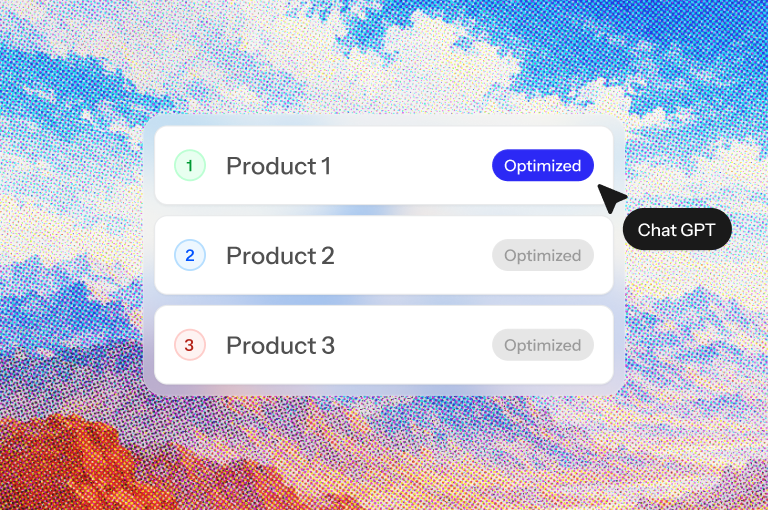
The opportunity is implementation. Most AEO tools hand back a list of recommendations and stop there. Someone still has to open the CMS, rewrite the content, publish the changes, and re-test. Across ten client sites, that is not a workflow. It is a bottleneck.
Agencies that build a repeatable implementation process, not just an audit report, are building something that is genuinely hard for a client to replicate with a self-serve tool. That is a stickier service and a more defensible position.
The agencies that are going to own this category over the next two years are the ones treating AEO as a content operations capability, not a one-time audit.
Why Moving Now Matters
New service categories in agencies follow a pattern. A shift happens in how buyers or systems behave. Early agencies figure out what it means, build a service, and own the conversation before it becomes standard. That window is open right now.
Most agencies have not formalised AEO as a service. Most clients do not have language for what is happening to their enquiries. The agencies that move first set the standard for what the service looks like, what it costs, and what good outcomes mean, before the market decides for them.
Early AEO improvements also tend to show the largest gains. Clients starting from a low baseline often see significant changes in brand mention rate and share of voice within the first few months. Those results become the case studies that sell the next client.
That window will not stay open. In twelve months most agencies will offer some version of this. The ones who started now will be the ones with the data to prove it works.
Flozi is built to make AEO deliverable at agency scale. It connects directly to Webflow and Shopify, crawls client sites, identifies retrieval issues, generates page-specific fixes, and lets you apply changes directly from the platform without developer handoff. Built for teams running this across multiple clients, not just one.
See how Flozi works for agencies
Frequently Asked Questions
What is AEO and why should agencies offer it?
AEO (Answer Engine Optimization) is the practice of optimising a website so that AI systems like ChatGPT, Perplexity, and Google AI Overviews recommend it when buyers ask category questions. Agencies should offer it because a growing share of B2B buyer research now happens inside AI tools before any Google search or site visit, and most clients are invisible at that stage without knowing it.
How is AEO different from SEO?
SEO optimises for Google rankings. AEO optimises for AI selection. SEO responds to backlinks, keyword relevance, and domain authority. AEO responds to content retrievability (can AI extract what the product does and who it is for) and brand authority (does AI have consistent enough signal to recommend the brand by name). A page that ranks well on Google can still be completely invisible to AI.
How do I know if a client needs this?
Run the baseline test. Ask ChatGPT and Perplexity the five questions buyers in their category ask most. If competitors appear and the client does not, there is a gap. If the client appears but is described inaccurately or vaguely, there is a brand signal problem. If the client's enquiry numbers have softened while traffic looks stable, the problem is almost certainly real.
Should AEO only focus on the client's own website?
No, and this is the most common mistake. In a review of AI citation patterns across five B2B SaaS categories, every cited source was a third-party comparison or review site, not a vendor's own page. Agencies need to audit and improve how clients appear on the platforms AI already trusts in their category, not just optimise the client's own content.
Can AEO be sold alongside an existing SEO retainer?
Yes. AEO does not replace SEO. The implementation work (content structure, page openings, schema markup, comparison pages) is complementary to existing content and SEO work. The measurement is separate: AI mention rate and share of voice rather than keyword positions and organic traffic.
How long before a client sees results?
Fixing crawl access issues can show results in weeks as AI crawlers re-index. Content structure improvements typically take one to three months. Brand authority and third-party presence build over time and require consistent work across the site and external platforms.
Do we need developers to implement changes?
Most high-impact changes are content and structure changes: rewriting page openings, adding FAQ schema markup, tightening product descriptions. These do not require development work. If the client is on Webflow or Shopify, Flozi lets the agency apply changes directly from the platform without developer handoff.
What should the audit report show the client?
Uncover deep insights from employee feedback using advanced natural language processing.
Get your content health score across ChatGPT, Perplexity, Gemini & Claude in 60 seconds.
Blogs
.avif)