What Is GEO (Geographical Engine Optimization)?
AI doesn’t match keywords. It maps topics. Learn how geographical engine optimization turns local discovery into AI visibility, and why most businesses in MENA are leaving this wide open.
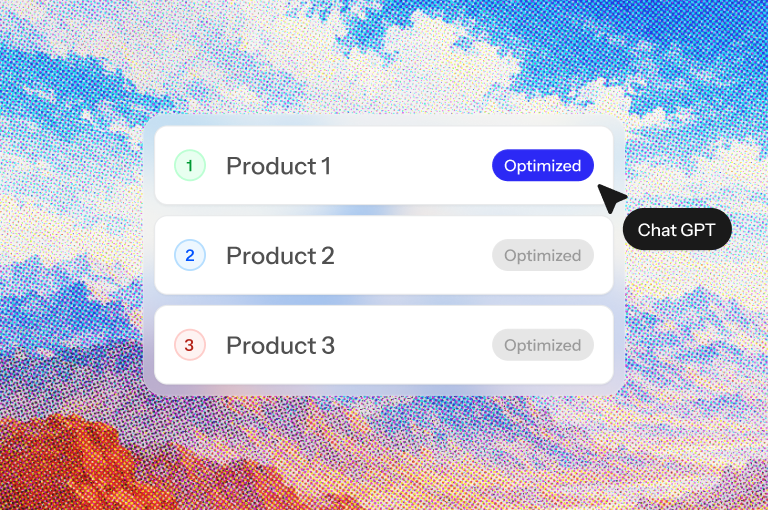
Ask ChatGPT: “best Webflow agency in Dubai.”
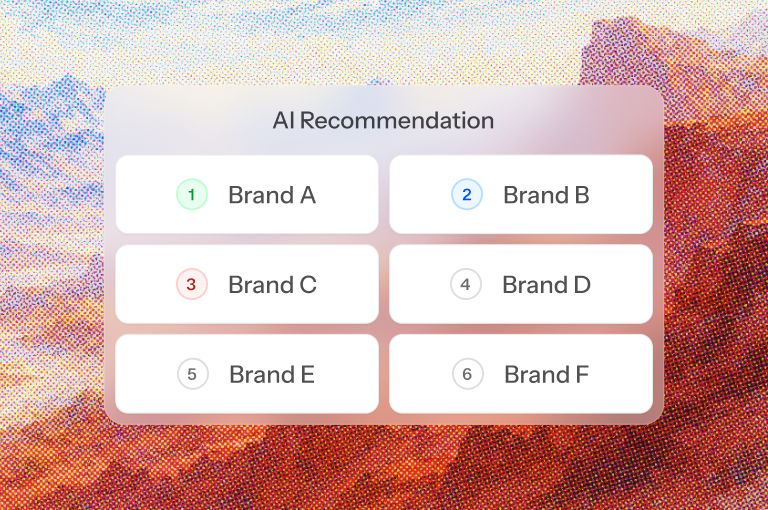
You’ll get a list. Three, maybe five names. Some with a short explanation of what they do and why they made the cut. The response looks confident. Authoritative. Like the AI did its homework.
Now ask yourself: how did those names get there?
Not through Google Maps rankings. Not through a local 3-pack. Not through the mechanisms that local SEO practitioners have spent a decade perfecting. The AI assembled that answer from a completely different set of inputs: entity recognition, topical association, cross-platform consistency, and geographic signal completeness.
That process, the one that determines whether your business shows up when someone asks an AI a location-specific question, is what we call Geographical Engine Optimization (GEO).
And almost nobody is doing it deliberately.
GEO Definition: More Than Map Rankings
Most people hear “geographical optimization” and think Google Maps. Pin on a map, five-star reviews, correct business hours. That’s local SEO, and it still matters. But GEO is a broader concept.
GEO is the practice of optimizing your business’s visibility across every surface where geography and discovery intersect. That includes traditional map results, yes. But it also includes AI assistants, voice search responses, local panels in AI Overviews, “near me” queries processed by LLMs, and the conversational recommendations that tools like ChatGPT and Perplexity generate when someone asks for location-specific help.
The distinction matters because those surfaces don’t all work the same way.
Google Maps ranks you based on proximity, relevance, and prominence within its own index. An AI assistant recommending a business works differently. It synthesizes information from across the web: your website, your Google Business Profile, review platforms, directory listings, social media, industry publications, and whatever else it can find. Then it evaluates whether you’re a recognizable entity in the context of that geography and that service.
That evaluation runs on three things:
Entity recognition. Does the AI know what your business is? Not just your name, but what you do, where you operate, who you serve, and what makes you distinct. If the AI can’t build a clear picture of your business as an entity tied to a specific location and set of capabilities, you won’t appear in its answers. Period.
Topical coverage. Does your online presence demonstrate genuine expertise in the services you claim to offer, within the geography you claim to serve? A web design agency in Riyadh that has zero content about the Riyadh market, no case studies from the region, no mention of local business challenges, is just a web design agency that happens to have an office there. The AI won’t associate it with Riyadh in any meaningful way.
Signal completeness. Are your business signals consistent and present across every platform the AI might check? Your website says one thing. Your Google Business Profile says another. Your LinkedIn says a third. The AI sees all of this, and inconsistency erodes confidence. Complete, consistent signals across platforms tell the AI: this is a real, established business in this location.
These three pillars are what separate GEO from traditional local SEO. Local SEO optimizes for a specific ranking system (Google’s local algorithm). GEO optimizes for how any AI system, present or future, understands your business in the context of a place.
The GEO Surfaces: Where Geography Meets Discovery
To understand why GEO requires a different approach, you need to see the full landscape of where geo-intent queries now get answered. It’s not one surface anymore. It’s at least five, and they’re multiplying.
Maps and Local Packs
The familiar one. Google Maps, Apple Maps, Bing Maps. You search “Italian restaurant near me,” you get a map with pins. This surface still drives significant foot traffic and phone calls. The optimization playbook here is well-established: accurate Google Business Profile, consistent NAP (name, address, phone) data, strong reviews, relevant categories, local schema markup.
What’s changing is that even this surface is getting an AI layer. Google’s AI Overviews now appear above local packs for many queries, and those overviews synthesize information differently than the map algorithm. A restaurant might rank well in the local pack but get zero mention in the AI Overview above it, because the AI evaluated a different set of signals.
“Near Me” and Conversational Queries
“Near me” searches have been growing for years, but the format is shifting. Instead of “dentist near me” typed into Google, users increasingly ask conversational questions: “Can you recommend a good dentist in Jumeirah?” or “I need an emergency plumber, who’s available in Al Quoz right now?”
These queries hit AI systems that process them as natural language. The AI doesn’t just look at proximity. It tries to understand the intent (emergency? routine? specialized?) and match it against businesses it recognizes as relevant to that specific combination of service, urgency, and location.
If your business isn’t represented as an entity the AI can reason about (not just a listing it can retrieve), you’ll be invisible to these conversational queries even if your Google Maps listing is perfectly optimized.
Local Panels in AI Overviews
Google’s AI Overviews and AI Mode increasingly generate local panels: structured recommendations that appear as part of a longer AI-generated answer. Ask “how do I find a reliable Webflow developer for my business in Dubai” and the AI Overview might include a panel with specific agencies, their specializations, and links to their sites.
These panels pull from a mix of sources. Google Business Profile data, website content, third-party reviews, industry directories, and contextual signals from the broader web. The businesses that appear in these panels tend to have strong entity signals: clear expertise, geographic association, and cross-platform validation.
AI Assistants and Chatbots
ChatGPT, Perplexity, Claude, Gemini. When users ask these tools for local recommendations, the AI has no local pack to fall back on. It builds its answer from training data and live web retrieval, evaluating which businesses are sufficiently recognized entities in the relevant geography.
This is where GEO becomes most distinct from local SEO. There’s no Google Business Profile algorithm to optimize for. The AI is making a judgment call based on the totality of your online presence. If you’re a well-known entity in your space and your location, you appear. If you’re not, you don’t. There’s no middle ground of “ranking #7 in the local pack.” You’re either in the answer or you’re not.
Voice Search and Smart Assistants
“Hey Siri, find me a good accountant in Abu Dhabi.” Voice queries are inherently conversational and almost always location-aware (the device knows where you are). The AI behind these assistants processes the query, evaluates options, and typically returns one or two recommendations, not a list of ten.
The bar for voice search is even higher than text-based AI queries, because the user gets fewer options. The AI has to be confident enough to recommend you as one of two or three choices. That confidence comes from entity strength, topical relevance, and signal completeness.
How GEO and AEO Merge
If you’ve been following this series, you’ll notice something: the three pillars of GEO (entity recognition, topical coverage, signal completeness) overlap heavily with what we’ve been discussing in AEO.
That’s not a coincidence. GEO is AEO with a geographical dimension.
In AEO, you optimize so that AI systems cite your content as a source when users ask questions. In GEO, you optimize so that AI systems cite your business as a recommendation when users ask location-specific questions. The mechanics are the same. The AI needs to recognize you (entity), trust that you know your subject (topical authority), and verify your claims across multiple sources (validation signals).
The difference is that GEO adds a geographic binding to every signal.
In AEO, an entity is “HubSpot is a CRM platform.” In GEO, an entity is “Neue World is a Webflow design agency based in Dubai that serves clients across the GCC.” The geographic context isn’t optional. It’s part of the entity definition itself.
In AEO, topical coverage means demonstrating deep expertise in your subject. In GEO, topical coverage means demonstrating deep expertise in your subject as it applies to your geography. A digital marketing agency in Jeddah that publishes content about digital marketing in the Saudi market, that references local consumer behavior, local platforms, and local business challenges, has stronger geographic topical coverage than one publishing generic marketing advice from the same office.
In AEO, signal completeness means consistent author credentials, transparent About pages, and source citations. In GEO, signal completeness means all of that plus consistent location data, localized schema markup, geo-tagged content, local backlinks, local directory listings, regional social media presence, and reviews from local customers.
The Entity-Location Bond
Here’s the concept that ties it all together: the AI needs to form a strong, unambiguous association between your business entity and a specific geography.
Think of it like this. When someone asks “best Webflow agency in Dubai,” the AI needs to do two things simultaneously:
- Identify entities that match “Webflow agency” (service/expertise match)
- Determine which of those entities are genuinely associated with “Dubai” (geographic match)
If your business only passes test #1, you won’t appear. Plenty of Webflow agencies exist worldwide. The geographic binding is what narrows the field. And that binding is built through accumulated signals: your address on your website, your GBP listing, your case studies mentioning Dubai clients, your team’s LinkedIn profiles listing Dubai as their location, your mentions in regional media, your reviews from Dubai-based businesses.
Each signal reinforces the bond. The more signals, the stronger the AI’s confidence that you are, genuinely, an entity located in and serving that geography.
What Completeness Actually Looks Like
We find it useful to think about GEO completeness as a checklist across three layers:
Layer 1: Foundation signals. These are the basics. Google Business Profile fully completed with accurate categories. Consistent NAP data across your website, directories, and social profiles. Local schema markup (LocalBusiness, Organization) on your site. Location pages with genuine local content, not just a city name swapped into a template.
Layer 2: Authority signals. These prove you’re established, not just registered. Reviews from local customers on Google, industry-specific platforms, and your own site. Backlinks from local organizations, local media, regional industry associations. Mentions in local business directories and city-specific resources. Case studies featuring local clients with real outcomes.
Layer 3: Topical depth signals. These prove you’re not just present, you’re an expert in this market. Content addressing local market challenges and opportunities. Blog posts or guides referencing local regulations, local trends, or local competitive dynamics. Event participation or sponsorships in the local market. Partnerships with other recognized local entities.
Most businesses handle Layer 1 partially and stop there. The businesses that AI systems recommend consistently have coverage across all three layers.
Why GEO Is a Cheat Code in MENA
Everything we’ve described so far applies globally. But there’s a region-specific angle that makes GEO particularly interesting for businesses operating in the Middle East and North Africa.
The opportunity in MENA is structural, not hypothetical.
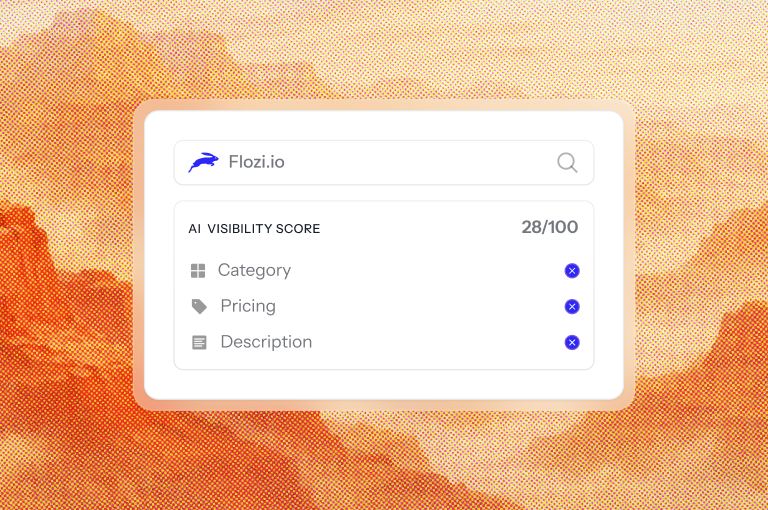
Most businesses in the region haven’t optimized for AI visibility at all. The local SEO foundations are often incomplete: Google Business Profiles with missing categories, websites without local schema, inconsistent NAP data across platforms, minimal reviews, and almost no localized content beyond a contact page with an address.
When you combine that baseline with the fact that AI systems need entities to associate with geographies, the math becomes favorable. In markets like the US or UK, hundreds of businesses in any given niche have strong entity signals, complete GBP listings, years of localized content, and robust review profiles. The AI has plenty of options to choose from.
In most MENA markets, the field is thin. Ask ChatGPT for recommendations in a specific vertical in Riyadh, Dubai, or Cairo, and the responses often look uncertain. The AI hedges. It qualifies. Sometimes it pulls in sources from outside the region because it can’t find enough locally authoritative entities to construct a confident answer.
That uncertainty is your window.
The First-Mover Advantage Is Real
In a market where ten competitors are fighting for the same space and all ten have weak geographic entity signals, the first one to build those signals properly doesn’t just gain an advantage. It becomes the default. The AI has limited choices, and if you’re the only entity with complete, consistent, geographically bound signals, you become the answer. Not one of the answers. The answer.
We’ve seen this pattern in early AEO work. When the retrievable content landscape is sparse for a given topic, a single well-structured source can dominate AI citations for months before competitors catch up. GEO in MENA operates on the same principle, but the landscape is even sparser because most businesses haven’t even started.
What Makes MENA Specifically Ripe
A few factors compound the opportunity:
Multilingual content gaps. Many businesses in the region operate in both Arabic and English, but their online presence is often lopsided. English-language signals might be decent while Arabic-language signals are minimal (or vice versa). AI systems processing queries in Arabic find even fewer well-structured entities to draw from. Covering both languages with complete signals gives you coverage across twice the query space.
Directory and platform fragmentation. The US has a well-established ecosystem of local directories, review platforms, and business listing services. MENA is more fragmented. Some platforms are regional (like Talabat for food, or Bayut for real estate), while global platforms have uneven coverage. This fragmentation means that businesses with consistent data across both global and regional platforms have a significant edge. The AI aggregates from multiple sources, and if you’re consistently present while competitors are patchy, you win.
Rapid AI adoption by consumers. ChatGPT and similar tools have seen strong adoption across the GCC in particular. Users in the region are increasingly comfortable asking AI for local recommendations, especially for professional services, dining, healthcare, and real estate. The demand side is growing faster than the supply side (businesses optimizing for it). That gap won’t last forever, but right now, it’s wide open.
Growing but underserved search markets. Many MENA markets have growing internet penetration and smartphone adoption, which means the pool of people using both traditional and AI search is expanding. But the volume of locally optimized content hasn’t kept pace. More searchers, same (or less) optimized content. That imbalance favors early movers.
The Practical Play
For businesses operating in MENA, the GEO strategy isn’t exotic. It’s the same three pillars applied to an environment where the bar is lower:
Start by completing your entity signals. Get your GBP to 100%. Make sure your website has LocalBusiness schema. Standardize your NAP across every platform you’re listed on.
Then build geographic topical coverage. Publish content that connects your expertise to your market. If you’re an accounting firm in Dubai, write about Dubai’s corporate tax framework, not generic accounting best practices. If you’re a fitness studio in Riyadh, write about fitness culture in Riyadh, not “10 tips for better workouts.”
Then pursue geographic authority signals. Get listed in regional directories. Earn reviews from local clients. Get mentioned in local media or industry publications. Partner with other established local entities.
Each of these steps is achievable. None of them require large budgets or sophisticated tooling. They require intent, consistency, and the understanding that AI systems are looking for these signals right now, and most of your competitors aren’t providing them.
Chapter Takeaway
GEO is what happens when AI starts answering questions that have a geographic dimension. It’s not a replacement for local SEO. It’s the next layer on top of it: the layer that determines whether AI systems recognize your business as a recommendable entity in a specific location.
The framework is three pillars: entity recognition (the AI knows what you are), topical coverage (the AI trusts your expertise in context), and signal completeness (the AI can verify your claims across sources).
For businesses in MENA, the timing is particularly favorable. The competitive landscape for geographic entity signals is sparse. The bar is low. And the window to establish yourself as the default AI recommendation in your niche and geography is open now, but it won’t be forever.
Where to start this week:
Audit your Google Business Profile for completeness. Check every field, every category, every attribute. If it’s not at 100%, fix it before doing anything else.
Run a consistency check on your NAP data across your website, GBP, LinkedIn, and the top three directories in your market. Any mismatches erode the AI’s confidence in your entity.
Publish one piece of content that connects your expertise to your geography. Not a blog post about your industry generally. A piece that only makes sense coming from someone who operates where you operate.
Ask ChatGPT and Perplexity for a recommendation in your niche and city. See what comes back. If you’re not in the answer, now you know the gap. If you are, read what the AI says about you and check whether it’s accurate and complete. Either way, you’ve just done your first GEO audit.
Frequently Asked Questions
How is GEO different from local SEO?
Local SEO optimizes for a specific system: Google’s local search algorithm. It focuses on Google Maps rankings, the local 3-pack, and proximity-based results. GEO is broader. It encompasses all the surfaces where geography and discovery intersect, including AI assistants, voice search, AI Overviews, and conversational recommendations. The optimization targets are different too: local SEO focuses on ranking signals within Google’s index, while GEO focuses on building your business as a recognizable entity that any AI system can identify, trust, and recommend within a geographic context.
Do I need a physical office in a location to do GEO?
Having a physical address helps, but it’s not the only path. What matters is whether the AI can build a credible association between your business and a geography. Service-area businesses without a physical storefront can still build strong geographic entity signals through localized content, local case studies, local client reviews, regional directory listings, and consistent geographic references across their online presence. The key is that the association needs to be genuine and verifiable across multiple sources, not just claimed on one page of your website.
Which AI platforms matter most for local queries right now?
Google AI Overviews (and AI Mode) reach the largest user base for local queries because they’re integrated into the world’s dominant search engine. ChatGPT is increasingly used for local recommendations, especially in professional services and dining. Perplexity is growing but currently has a smaller share of local queries. Voice assistants (Siri, Google Assistant) handle a significant volume of “near me” and location-aware queries. Rather than optimizing for one platform, GEO focuses on building entity signals that work across all of them, since they all evaluate similar signals.
How long does it take to see results from GEO?
The foundation signals (GBP completion, NAP consistency, basic schema) can have an effect within weeks, especially in markets with low competition. Topical coverage and authority signals take longer to compound, typically two to four months before you start seeing consistent presence in AI recommendations. In markets like MENA where competition for geographic entity signals is low, results can come faster because the AI has fewer alternatives to choose from. The more signals you build, the stronger the compounding effect becomes over time.
Can I do GEO for multiple locations?
Yes, but each location needs its own entity signals. A business with offices in Dubai and Riyadh needs separate, complete signal sets for each city: distinct location pages with genuine local content, separate GBP listings, location-specific reviews, and content that ties your expertise to each market individually. Template-based approaches (swapping city names into identical pages) don’t work because the AI can detect that the content isn’t genuinely localized. Each location needs its own topical coverage that reflects real knowledge of that market.
Uncover deep insights from employee feedback using advanced natural language processing.
Get your content health score across ChatGPT, Perplexity, Gemini & Claude in 60 seconds.
Blogs
.avif)