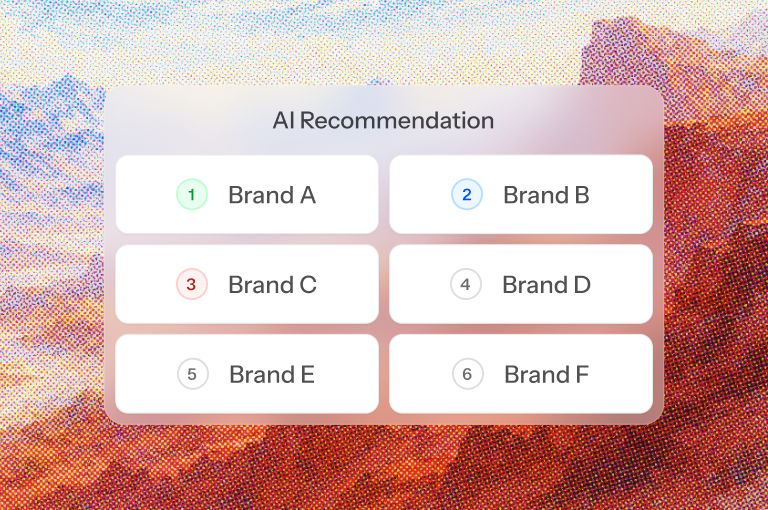
The GEO Playbook: Maps, Reviews, and Local Intent
Your clients have Google Business Profiles. They have reviews. Some have location pages. And yet when you ask ChatGPT for a recommendation in their category and city, they don’t appear. Learn exactly what the AI is reading, and how to build a local signal stack that changes that.
Here’s a scenario worth spending time on.
Two legal consultancies. Same city. Both four-point-seven stars on Google. Both operational for five or more years. One gets cited regularly when people ask ChatGPT or Perplexity for legal help in that city. The other doesn’t appear at all.
If you audit their Google Business Profiles side by side, the difference shows up immediately. The first has recent posts, forty-plus photos, an active Q&A section, booking enabled, and a review stream coming in at roughly six new reviews per month. The second has a completed profile that hasn’t been touched in eight months.
The surface reading is that one business is “more active.” The more precise reading is that one business has been feeding the AI structured, current, verifiable signals, and the other has been silent.
That’s the frame for this entire chapter. When you execute GEO, you’re not filling out forms or ticking boxes. You’re building a structured signal architecture that AI systems can read, trust, and cite when someone asks a location-aware question. Every tactic in this playbook maps back to that single function: reduce ambiguity for the AI. Make it easier for the system to build a confident association between your client’s business, their expertise, and their geography.
The previous chapter covered what GEO is and where it sits relative to AEO. This one is execution: what to do, in what order, and exactly how much of each thing.
Google Business Profile: Stop Treating It as an Admin Task
Most practitioners complete a client’s GBP during onboarding and don’t revisit it. Categories set, hours entered, description written. The listing exists. The box is checked.
The problem is that AI systems don’t treat a GBP the way you’d treat a completed form. They treat it as a live entity feed. A profile completed once and left static signals something specific to the AI: an entity that exists but isn’t being maintained. And a dormant entity is a low-confidence recommendation.
Think about what the AI is evaluating when someone asks for a recommendation in a local category. The system needs to distinguish between entities that are actively operating in this space and entities that merely claim to. Active management signals are one of the clearest proxies it has for that distinction. Regular posts mean the business is communicating. Recent photo uploads mean someone is maintaining the representation. An active Q&A section means the business is engaging with real queries. Booking integration signals that you can complete a transaction here, not just request more information.
None of these individually tips the scales. But collectively, they build entity strength: the AI’s confidence that this is a real, currently operating, recommendable business in this location.
The framework for GBP optimization runs across three priority tiers.
Tier 1 (Foundation): Business name, verified address, phone number, accurate hours, website link, and a substantive business description. These are non-negotiable entry points. Without them, nothing else compounds on top. The description is consistently written too generically; it should include your service category, geography, and one specific differentiator. Not “we provide high-quality legal services” but “Dubai-based corporate law practice specializing in UAE commercial contracts and free zone regulatory compliance.”
Tier 2 (Entity Signals): Ten or more photos covering exterior, interior, team, and services. Individual service listings with descriptions. All applicable attributes selected. A Q&A section seeded with three to five common questions and answered in the business’s voice. This tier is where most profiles stall, and where the gap between “compliant” and “competitive” lives.
Tier 3 (Active Management): Weekly posts, monthly photo refreshes, booking or ordering integration where applicable, and product catalog completion for relevant businesses. These are the signals that separate a dormant listing from a live entity. They don’t all need to be live at launch. But they’re what the consistently cited businesses in any local category tend to have in common.
The practical target: audit every client’s GBP against these three tiers before touching anything else. Tier 1 complete before anything else. Tier 2 finalized within the first month. Tier 3 built as an ongoing management cadence, not a one-time setup item.
Reviews: The Three Numbers That Actually Matter
Local SEO advice has always said “get more reviews.” That advice is vague enough to be nearly useless, because it doesn’t tell you what the AI is actually reading in a review profile.
Here’s what it’s reading: volume against a threshold, rating against a threshold, and velocity as a recency signal.
The volume threshold that correlates with consistent AI citations sits around 25 reviews at a 4.2 rating or higher. Below that floor, the AI doesn’t have enough evidence to construct a confident recommendation. 25 at 4.2+ is a defensible minimum. 50+ at 4.5+ starts to look competitive in most categories. 100+ at 4.7+ is dominance.
But volume without recency tells an incomplete story. A business with 100 reviews, two of which came in the last month, looks stagnant to an AI evaluating current relevance. A business with 40 reviews acquiring six per month looks active, present, and in demand. The AI weights recency because recency signals that the business is still operational and still serving customers at a meaningful volume. A healthy review velocity target for most businesses is between four and eight new reviews per month. Below one per month is stagnant. Above nine is excellent.
The third signal is response rate. Responding to 80% or more of your reviews is an active management marker. A business with 60 reviews and no responses from the owner signals, in the language AI systems read, that nobody is monitoring this channel. A business with 60 reviews and 50 owner responses signals that someone is paying attention. Combined with velocity, a high response rate reinforces the “live entity” picture.
What practitioners frequently underweight is review content. The AI doesn’t just count reviews. It reads them. Reviews that mention specific services, specific team members, specific neighborhoods, and specific experiences give the AI richer data to work with. A review saying “great service” contributes to rating but adds no semantic value. A review saying “their contract review process helped us navigate a Dubai free zone setup” reinforces the entity’s service association and geographic context simultaneously.
You can’t control what customers write. But you can design your review request process to ask specific questions that naturally produce detailed responses. The difference between “please leave us a review” and “could you tell us about the specific service you used and how it helped your business?” is the difference between a generic sentiment signal and a structured data point the AI can actually use.
Local Landing Pages: Genuine Geography, Not Name-Stuffing
If you’ve worked in SEO long enough, you’ve seen the template problem. An agency creates a stack of location pages for a client by taking one master template and swapping city names throughout. Same structure. Same content. Only the place name changes.
This approach fails at the core GEO task: building a real geographic entity bond. The AI can detect when a page about “legal services in Abu Dhabi” was generated by replacing “Dubai” throughout a template. What it can’t do is extract a genuine geographic association from it, because there isn’t one.
The city plus neighborhood model solves this. The architecture works as follows: you build a primary landing page for each city where the business genuinely operates, then build supporting neighborhood or district pages for the areas within that city where you have real clients, real case studies, or real local knowledge.
The city page is the entity anchor. It needs to do several specific things: establish the service category and city association clearly near the top, include locally specific context that could only exist if the business actually operates there (local regulations, local market conditions, references to relevant business districts), feature case studies or testimonials from clients in that city, and carry accurate LocalBusiness schema markup with correct address data.
The neighborhood pages extend the entity’s geographic coverage into more specific queries. Someone asking an AI for a recommendation “in Jumeirah” is expressing finer-grained local intent than someone asking about “Dubai” broadly. If you have a neighborhood page for Jumeirah that references actual work done there, demonstrates genuine familiarity with the area, and links back up to the Dubai hub page, you’ve built a geographic signal stack that covers both the broad and the specific query.
What the AI reads on these pages isn’t just keyword presence. It’s the coherence of the geographic claim: does this page demonstrate that the business actually knows and serves this area, or is it asserting a location without supporting evidence? The gap between those two is what determines whether the page strengthens your GEO architecture or just exists without contributing to it.
Local Backlinks and Citations: 15 Right Ones Beat 100 Wrong Ones
Local citations (consistent business listings across directories) exist to solve one specific AI problem: cross-platform validation. When the AI encounters your business across multiple independent sources all reporting the same information, the entity picture solidifies. When your website says one address, your GBP says another, and a directory listing has a third phone number, the AI’s confidence degrades.
The first job is consistency, not volume. Before building new citations, audit what already exists. Inconsistent NAP data across your current listings actively undermines the GEO work you’re doing elsewhere. Fix errors before adding new entries.
For new citation building, prioritization matters more than quantity. The citations that contribute most to AI visibility tend to be the ones the AI actually draws from: major data aggregators (Yelp, Bing Places, Apple Maps), industry-specific directories relevant to your client’s category, regional platforms relevant to their geography, and local chamber of commerce or business association listings that carry genuine authority.
For MENA markets, this extends to regional platforms: Bayut for real estate, Talabat for food and hospitality, and country-specific business directories for Saudi Arabia, the UAE, and Egypt. An agency working with GCC clients that only builds citations on global platforms is missing an entire layer of regional signal.
Local backlinks operate the same way but carry more weight. A mention in a regional business publication, a partnership page with a recognized local organization, or a case study featured on a local industry association’s site contributes more to geographic entity strength than fifty generic directory entries. These links are harder to earn, which is precisely why they matter more. The AI reads local backlinks as third-party validation of your geographic presence. Not just your existence on a list, but your recognition by other entities that are themselves geographically established.
Bilingual GEO for MENA: Not Translation, Adaptation
For practitioners working in Arabic-speaking markets, the bilingual layer of GEO is one of the highest-leverage moves available. Most businesses in the region operate with a dominant English-language online presence while their Arabic signals are either minimal or machine-translated. That’s not a cosmetic gap. It’s a query coverage gap that the AI experiences directly.
When a user in Saudi Arabia asks an AI for a local recommendation in Arabic, the system processes that query differently than it would in English. It looks for entities with strong Arabic-language signals to construct its response. A business with only English signals may still appear if its overall entity strength is high enough, but it’s at a structural disadvantage compared to a business with complete signals in both languages. And the Arabic query population in MENA is large, growing, and currently under-served by well-optimized local entities.
Bilingual GEO means treating Arabic-language optimization as a parallel signal system, not an afterthought. This includes completing your GBP in Arabic with a properly localized description (not a translation), creating Arabic-language location pages that reflect how local audiences phrase service queries, and building a review acquisition process that makes it natural for Arabic-speaking customers to leave reviews in Arabic.
The cultural adaptation layer goes further than language. In MENA markets, the trust signals that matter to consumers, the platforms where reviews carry weight, and the business associations that lend credibility vary by country and cultural context. A bilingual strategy that treats Arabic as a translated version of the English strategy will consistently underperform. One built from Arabic-speaking users’ actual search behavior outward will capture recommendations that no English-only competitor is contesting.
The 30-Day Starting Point
GEO implementation can look overwhelming when you see the full picture. There’s depth in every section above, and genuine differences across categories, cities, and markets. But the majority of the initial value comes from the first 30 days, and those 30 days have a clear sequence.
Days 1 through 10: Complete the GBP Tier 1 and Tier 2 checklist. Audit existing citations for NAP consistency and resolve any discrepancies. Create or update the primary location page for each city the client genuinely serves.
Days 11 through 20: Activate a review acquisition system. A templated email or SMS to recent customers, with a direct link to the review page and one specific question to prompt detail, is enough to start building velocity. Set a target of four to six new reviews before the month ends.
Days 21 through 30: Submit to the top 10 relevant directories in priority order. Publish the first GBP post. For MENA-focused clients: complete the Arabic GBP fields and begin scoping the bilingual location page, even if the full Arabic content build comes in month two.
The full playbook, including neighborhood pages, Tier 3 GBP management, local backlink acquisition, and bilingual content depth, extends well beyond 30 days. But the work in this first month builds the foundation that everything else stacks on. More importantly, it gives you a measurement baseline: you’ll know your AI citation frequency, your GBP performance metrics, and your review velocity before you’ve invested in any of the more resource-intensive work.
Where to start this week:
Audit the client’s GBP against the three-tier framework. Document exactly which fields are incomplete, which photo categories are missing, and whether any active management signals are live.
Pull a NAP consistency check across at least five citation sources: the website, GBP, Bing Places, Apple Maps, and the most relevant industry directory. Fix any mismatches before adding new listings.
Check the review profile: total count, current rating, and how many reviews came in the last 30 days. If velocity is below four per month, build a review request template and send it to the five most recent satisfied clients.
Ask ChatGPT, Perplexity, and Google’s AI Overview for a recommendation in the client’s category and city. Document who appears, what the AI says about them, and whether your client appears at all. That single exercise tells you where the entity gap is, and gives you the clearest possible brief for the work ahead.
Frequently Asked Questions
How is this different from standard local SEO?
Standard local SEO optimizes your Google Maps ranking within Google’s algorithm. The GEO playbook is optimizing for something broader: building your business as a recognized entity that AI systems across multiple platforms (Google AI Overview, ChatGPT, Perplexity, voice assistants) can read, trust, and recommend. Most of the tactical overlap is in GBP and reviews, but the reasoning is different. You’re not chasing a ranking position in one system. You’re building a structured signal architecture that reduces ambiguity for any AI processing a location-aware query.
Which section of the playbook should I tackle first?
GBP Tier 1 and Tier 2 completion, followed immediately by a review velocity system. These two areas have the fastest return relative to effort and provide the clearest signals to AI systems. Location pages and citations are important, but they compound more slowly. Reviews and GBP signals have the most direct effect on whether the AI includes a business in local recommendations.
How do I handle clients who operate in multiple cities?
Each city needs its own signal stack. A single GBP with multiple service areas and one location page listing all cities is not sufficient. For each city where the client genuinely operates, you need a distinct location page with locally specific content and, where feasible, a separate GBP listing with a verified address. The key principle: don’t build city signals for locations where the business doesn’t have genuine presence. AI systems are increasingly capable of detecting thin geographic claims, and a fabricated signal stack can erode overall entity confidence rather than expand it.
How does bilingual GEO affect a client who already ranks well in English?
It extends their coverage into a separate query population without touching the English signals. A business ranking well in English for “marketing agency in Riyadh” is not necessarily capturing the equivalent Arabic query. Bilingual GEO targets both query populations independently. In MENA markets, the Arabic query population is often larger and less competed for, which means well-executed bilingual signals can produce faster results on the Arabic side than additional English optimization would produce on a market that’s already more saturated.
How do I measure GEO progress?
Three core indicators: AI citation frequency (how often the business appears in AI-generated recommendations for relevant queries, tested manually with ChatGPT and Perplexity monthly), GBP performance metrics (profile views, direction requests, call clicks), and review velocity and rating trends over time. The manual citation audit, running a set of 10 to 15 relevant local queries across two or three AI platforms each month, is currently the most reliable method for tracking AI-specific GEO progress. Dashboards for this are still maturing; the manual process is the honest starting point.
Get your content health score across ChatGPT, Perplexity, Gemini & Claude in 60 seconds.
Uncover deep insights from employee feedback using advanced natural language processing.
Blogs
%20(1).jpg)
.avif)