AEO for Shopify: The Complete Guide
What AEO is, why Shopify brands need it, and how to get your products into AI recommendations. Complete guide with practical steps for product pages, brand authority, and tracking.
Most AEO guides will tell you to add FAQ sections, use conversational language, and implement structured data. That advice is written for blogs and content publishers. It's not wrong, but it misses what actually matters for a Shopify store.
For Shopify brands, AEO is a product selection problem, not a content format problem.
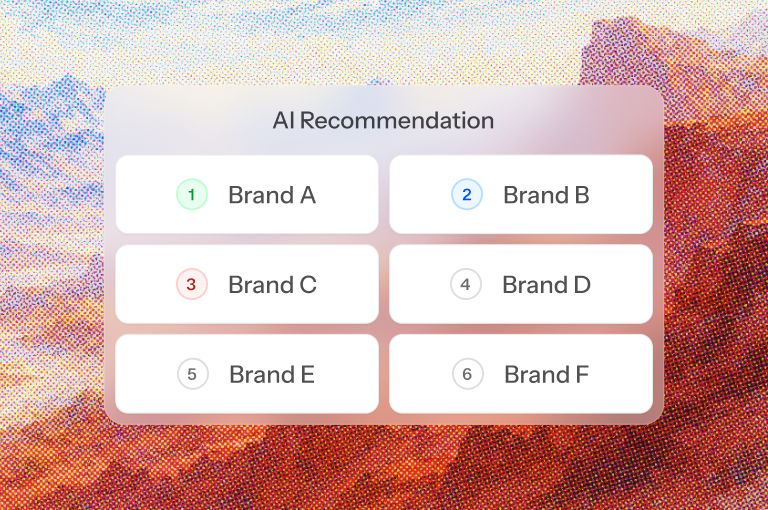
When a buyer asks ChatGPT "what's the best moisturizer for combination skin" or Perplexity "which protein powder is good for women over 40," AI generates an answer with one or two brand names. The buyer opens those products. Everything else stays invisible. That selection process has nothing to do with FAQ sections. It comes down to whether AI can clearly read your product pages and whether AI trusts your brand enough to name it.
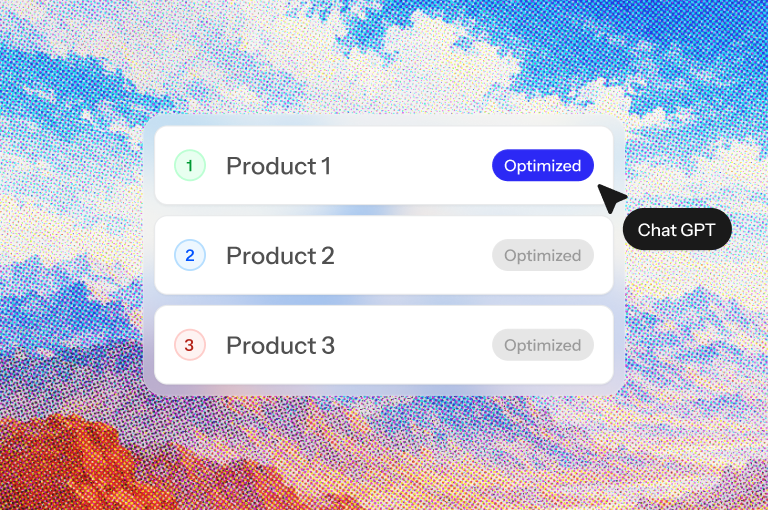
AEO (Answer Engine Optimization) for Shopify means optimizing for that selection. Not ranking in a list of results. Being the brand AI names when a buyer in your category asks for a recommendation.
Your Shopify store can hold a top position on Google for a competitive category keyword and still not appear in a single AI-generated product recommendation. Both systems run in parallel. They respond to different signals. Most Shopify brands have spent years on one and done nothing for the other.
This guide covers how AI selection actually works for products, what's blocking most Shopify brands from appearing, and what to fix first.
AEO is not Shopify SEO
The instinct is to treat AEO as an extension of your existing SEO work. That gets the relationship wrong.
SEO and AEO share some foundations: well-structured content helps both, clear language helps both, technical health helps both. But the signals that actually determine outcomes in each system are different enough that you can score well in one and zero in the other.
SEO optimizes for ranking signals: backlinks, page authority, keyword relevance, Core Web Vitals. The goal is a position in a list of results. A buyer clicks from that list to your site.
AEO optimizes for selection signals: whether AI can clearly extract what your product is and who it's for, and whether AI has enough consistent signal about your brand to name it when there's competition. The goal is inclusion in a generated answer. A buyer follows that recommendation to your site, often without comparing alternatives.
The practical gap between the two: a product page that ranks well on Google can be structurally invisible to AI. If your description leads with brand story, stacks adjectives, and buries the actual product specifics, AI may extract context from your page to understand the category, and then name a brand it can read more clearly. Your content contributed to the answer. Your brand didn't appear in it.
How buyers now discover products
Shopify brands in most product categories are facing a change at the top of the purchase funnel.
Buyers with considered purchases (supplements, skincare, cookware, pet food, fitness gear, baby products) are increasingly starting with a question to an AI system rather than a Google search.
"Best collagen supplement for someone over 40."
"Non-toxic cookware brand that's actually safe."
"Running shoe for overpronation and high arches."
"Dog food for a senior Labrador with joint issues."
These aren't edge-case behaviors. In high-consideration verticals, asking AI before searching is becoming the default research step. The buyer gets one or two answers. They visit those brands. The rest of the consideration set never gets evaluated.
This creates a layer of product discovery that happens before Google, before paid social, before your category pages do any work. Most Shopify brands have no visibility into that layer. AI Overviews Are Killing Website Traffic covers the broader shift in how search works. For Shopify brands, the specific version is this: the decision of which products to seriously consider is increasingly made before the buyer reaches your store.
How AI selects which products to recommend
When a buyer asks for a product recommendation, two things happen sequentially.
Retrieval. AI queries an index of web content and pulls back relevant passages. Your content either makes that retrieval pool or it doesn't. Whether it does depends on whether AI can clearly read your pages and extract what your product is, who it's for, and what differentiates it from alternatives. Pages with vague descriptions, inconsistent category language, or missing structural signals get skipped or partially read.
Generation. AI takes the retrieved passages and constructs a response. This is where brand authority determines whether your name appears. AI may use your content to understand the category and build the answer, and then name brands it has stronger, more consistent signals about. Strong retrieval gets your information into the answer. Strong authority gets your brand named in it.
For a technical breakdown of how AI processes web content through this pipeline, see How LLM Search Works.
Flozi describes this as the R×A framework: AI Selection = Retrievability x Authority. Both have to work. If your product pages are clearly structured but AI doesn't have consistent brand signals, you'll contribute content to answers without being named. If your brand signals are strong but your product pages can't be extracted cleanly, AI may know you exist but can't reference you accurately in product-specific answers.
Where citations actually come from in Shopify categories
The retrieval pattern in e-commerce is worth understanding before you start optimizing.
Run any of the queries your buyers use and look at what gets cited. The pattern is consistent across categories:
"Best moisturizer for combination skin" (beauty): ChatGPT cited Harper's BAZAAR, Healthshots, and BeBeautiful. Google AI Overviews cited Vogue UK, mindbodygreen, and menshealth.com. Brands recommended included Neutrogena, Minimalist, and CeraVe. The recommendations came from what those editorial sources had written, not from the brands' product pages.
"Best collagen supplement for joint pain" (supplements): Citations went to PubMed, NIH, Arthritis Foundation, and GoodRx. Brands like Sports Research and Vital Proteins were named. The source of authority was clinical research and health editorial, not the brand sites.
"Best non-toxic cookware set 2026" (home/kitchen): Serious Eats, Food & Wine, Allrecipes, and Mindful Momma were the cited sources. Caraway, GreenPan, All-Clad, and Made In were the brands that appeared. None of them were sourced from their own product pages.
The recommended brands weren't cited from their own product pages. In each case, the citations went to the editorial publications AI trusts in that category.
That's the pattern across most Shopify product categories. AI cites the publications it trusts in each vertical: Healthshots and Harper's BAZAAR for beauty, PubMed and Arthritis Foundation for supplements, Serious Eats and Food & Wine for kitchen, Babylist and Good Housekeeping for baby, Runner's World for footwear, Dog Food Advisor for pet care. These publications have established authority signals, structured content AI can extract cleanly, and broad topic coverage that makes them reliable retrieval sources.
Brand product pages do get read. But in most categories, they're used to extract product-level facts, not as primary citation sources. The editorial layer is where AI forms its category model.
This matters because it raises the bar for what your owned properties need to do. When a buyer asks for a recommendation, AI is drawing on a rich editorial picture of your category: hundreds of reviews, roundups, and expert comparisons. Your product page is one input into that. If it can't clearly answer what your product is, who it's for, and what makes it different, AI fills in the gaps using other sources, and names whatever brand those sources support most clearly.
The work that's within your control: making your product pages as extractable as possible, and making sure your brand sends consistent signals across every page AI reads on your site. That's where the gap usually is, and it's fixable.
The two things you need to fix
Retrievability: what AI needs from your product pages
Retrievability is whether AI can extract the core facts about your product from your page. AI is looking for a specific set of things:
- What is this product?
- What does it do?
- Who is it for?
- What makes it different from alternatives?
- What do buyers say about it?
If your product description doesn't answer all five clearly, and early, you lose the retrieval. The most common failures on Shopify product pages:
Story-first descriptions. Opening with brand origin, founder mission, or values before stating what the product is. AI is looking for product facts first. If the first paragraph doesn't establish what the product is and who it's for, you've already lost the extraction.
Adjective stacks. "Premium," "luxurious," "revolutionary," "exceptional quality" give AI nothing to extract. Specific attributes do: "fragrance-free formula for sensitive skin and eczema-prone skin," "11-inch carbon steel pan, seasoned, oven-safe to 600°F," "adjustable dumbbell set, 5-52.5 lbs in 2.5 lb increments."
Missing FAQ structure. AI builds answers from Q&A patterns. A product page with a structured FAQ block, even two or three questions addressing fit, ingredients, use, and common comparisons, increases the likelihood of AI pulling from that page. The Advanced AEO Strategies post covers the technical mechanism.
Inconsistent category language. If you call your products "running shoes" on one page, "performance footwear" on another, and "athletic sneakers" on a third, AI can't build a clear category model for your brand. Consistent language across all product pages is an extractability signal.
For the full step-by-step on product page optimization, see How to Optimize Shopify Product Pages for AI Recommendations.
Authority: how AI builds a model of your brand
Authority is whether AI has enough consistent signal about your brand to name it confidently when constructing an answer. This is built from everything AI knows about you: your website content, your About page, third-party coverage, review sites, press, directory listings, editorial mentions.
Brands with strong, consistent signals across those sources get named. Brands with mixed or sparse signals don't, even if their products are good and their pages are well structured.
The signals that matter most for Shopify brand authority:
Consistent brand description across your site. If your homepage calls you a "clean beauty brand," your About page says "natural skincare company," and your product pages say "organic formulas," AI is getting three slightly different signals about what you are. Pick the language and use it everywhere.
Category ownership. AI looks for whether your brand is clearly associated with a specific category. A brand that signals "we are the [category] brand for [specific audience]" builds stronger authority than one with a broad or shifting positioning.
Third-party corroboration. Press coverage, editorial roundups, Trustpilot and Google Reviews, Healthline or Byrdie or Wirecutter mentions, stockist pages: these tell AI that independent sources agree your brand is credible in its category. A brand that only exists on its own website is harder for AI to trust than one that appears consistently across multiple sources.
Expertise content. Blog posts, guides, and educational content that demonstrate genuine category knowledge are strong authority signals. You don't need a large content operation. A handful of well-structured pieces that AI can clearly attribute to your brand, on topics your category buyers actually care about, builds meaningful authority.
For a full breakdown of how AI builds trust in e-commerce brands, see How AI Builds Trust in E-Commerce Brands.
How to audit your Shopify store's AEO baseline
Before optimizing, establish where you stand.
Step 1: Run your category queries in AI systems.
Ask ChatGPT, Perplexity, and Google AI Overviews the questions buyers in your category use. "Best [product type] for [use case or condition]" is the standard pattern. For each query, note:
- Does your brand appear?
- If it does, what does AI say about it? Is it accurate?
- Which brands do appear? What do their pages have that yours don't?
- Does AI use information that could only come from your pages without naming your brand? That's a retrievability success but an authority failure.
Spend 30 minutes running 10-15 queries across two or three AI systems. The pattern will be clear quickly.
Step 2: Evaluate your top product pages.
For your five highest-traffic or highest-priority product pages, check:
- Does the first paragraph clearly state what the product is, what it does, and who it's for?
- Is the category language consistent with the rest of your site?
- Is there a FAQ block on the page?
- Is there Product schema implemented?
- Are customer reviews present and readable on the page?
Flag every failure. Those are your first optimization targets.
Step 3: Check brand consistency across your site.
Open your homepage, About page, and three product pages in separate tabs. Compare how your brand is described across them. Is the language consistent? Is the category the same? Is the audience the same? Inconsistency is an authority failure.
How to measure progress
AI visibility isn't measured in Google Search Console or Google Analytics. It needs a separate tracking approach.
The three things to track: brand mention frequency (are you named, and across how many queries), accuracy (when you are named, is what AI says about you correct), and share of voice (how often you appear relative to the brands you care about).
Month-over-month changes in mention frequency are your primary AEO metric. Retrievability improvements typically show in AI answers within 4-8 weeks. Authority improvements take longer: 8-16 weeks is realistic.
Doing this manually means running 10-20 queries across ChatGPT, Perplexity, and Google AI Overviews every month and logging the results. Flozi tracks this automatically: it monitors your defined query set across AI systems, surfaces changes in mention frequency and accuracy, and ties shifts back to the page-level changes that caused them. For a step-by-step on setting this up, see How to Track Your Shopify Store's AI Visibility.
Where to start
One check before anything else: confirm AI crawlers can access your store. Open your robots.txt and verify that GPTBot, ClaudeBot, PerplexityBot, and OAI-SearchBot are not blocked. If they are, everything else is invisible to the systems you're trying to reach.
After that, run a baseline. Most Shopify brands find they're less visible than they assumed, and that the gap is concentrated in categorical queries ("best [product] for [use case]") rather than branded ones. That's where AEO work has the most impact.
Flozi runs this as a structured diagnosis: it tests your store against the queries buyers in your category use, identifies which product pages AI can and can't extract clearly, and flags where your brand signals are inconsistent. The output is a prioritized fix list showing what to change and in what order, so you're not guessing at where to start.
Frequently asked questions
What is AEO for Shopify?
AEO (Answer Engine Optimization) for Shopify is the practice of optimizing your store so AI systems select your products when buyers ask for recommendations. When a buyer asks ChatGPT or Perplexity "what's the best [product type] for [use case]," AEO determines whether your brand is one of the products that appears. It operates separately from Google SEO and responds to different signals.
How is AEO different from Shopify SEO?
SEO optimizes for Google ranking signals: backlinks, page authority, keyword relevance. AEO optimizes for AI selection signals: whether AI can clearly extract what your products are and who they're for (retrievability), and whether AI has enough consistent signal about your brand to name it when buyers ask (authority). A store can rank well on Google and be absent from AI recommendations.
How long does it take to see results?
Retrievability improvements, changes to product page structure and descriptions, typically show in AI answers within 4-8 weeks. Authority improvements, brand consistency and third-party coverage, take longer: 8-16 weeks is realistic. The baseline audit tells you which to fix first.
Is AEO effective for all Shopify products?
AEO is most effective in categories where buyers ask AI for recommendations before purchasing: beauty, health, supplements, pet care, home goods, fitness equipment, baby products. Categories where buyers search by exact product name or SKU see less impact. The baseline check tells you how much AI activity exists in your specific category.
Do I need a blog to build AI authority?
Not a large one. A handful of well-structured pieces that demonstrate genuine category knowledge is sufficient. Brand consistency across your existing pages and third-party editorial mentions typically have more impact than blog volume alone.
What does Flozi do for Shopify brands?
Flozi runs a structured diagnosis of your Shopify store: which product pages AI can and can't extract clearly, where your authority signals are weak or inconsistent, and which category queries you're absent from. The output is a prioritized fix list showing what to change and in what order.
AI has already built a model of your category and the brands in it. The question is what that model says about yours.
Uncover deep insights from employee feedback using advanced natural language processing.
Get your content health score across ChatGPT, Perplexity, Gemini & Claude in 60 seconds.
Blogs
.avif)