AEO for SaaS: How AI Decides Tools to Recommend
AI assistants recommend SaaS tools before buyers ever visit your site. Here's what AEO is, how AI selects which tools to name, and how to get your product on the list.
That answer is constructed before they visit any website. Before your ads run. Before your organic rankings mean anything.
If your product isn't in that answer, the consideration never starts.
This is what AEO is: Answer Engine Optimization. It's the gap between what most SaaS teams are investing in and where their buyers are actually making decisions.
AEO Is Not SEO
SEO optimizes for ranking signals: backlinks, page authority, keyword relevance. AI doesn't rank pages. It selects content and constructs answers.
The signals are different. AI responds to two things:
Retrievability: Can AI extract, from your page, what your product does, who it's for, and what problem it solves?
Brand authority: Does AI have consistent enough signal across your site to trust recommending your brand by name?
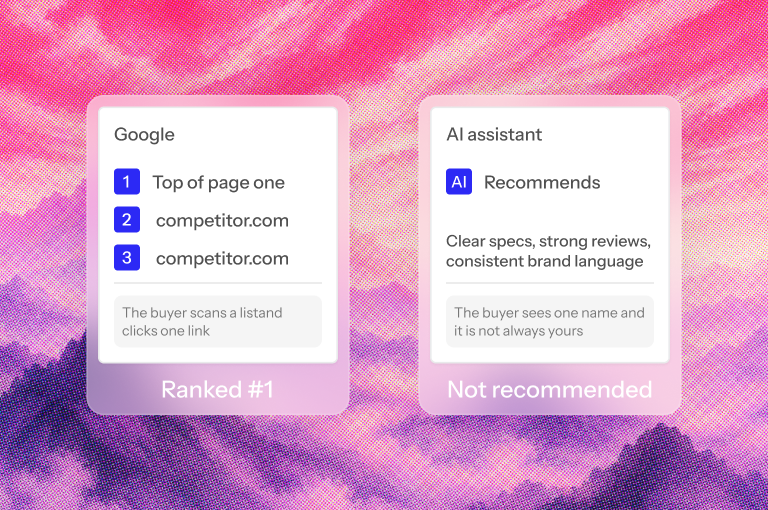
A page that ranks #1 on Google can be completely invisible to AI. Both systems run in parallel. Most SaaS teams have spent years optimizing for one and done nothing for the other.
Buyers Ask AI First
SaaS buyers are research-heavy. Before a trial, before a demo, before they reach your site, they ask questions.
"What's the best CRM for a 10-person sales team?"
"What project management tools work with Slack?"
"Is [your product] good for enterprise?"
AI gives them one or two names. If your product isn't one of them, the consideration never starts. The buyer visits the sites AI recommended, builds their shortlist, and your product wasn't in the conversation.
By the time they search for your product name, the decision is already half-made. AI built the shortlist. You weren't on it.
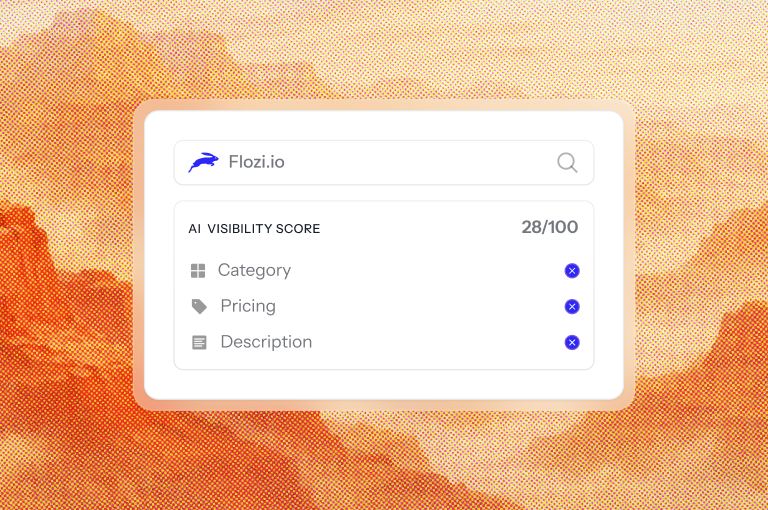
For product marketers, this is a positioning problem as much as a technical one. The way your brand is described, across your site, your docs, your blog, is the signal AI uses to decide who to recommend. Vague positioning, inconsistent messaging, and pages that build to a point instead of leading with one: these are the things that make you invisible. For SaaS teams, fixing this starts with knowing exactly which pages are contributing to that invisibility, and which ones AI already trusts.
How AI Selects a SaaS Tool
When a buyer asks for a tool recommendation, two things happen.
Retrieval. The AI queries an index of web content and pulls back relevant passages. Your content either makes this shortlist or it doesn't. Whether it does depends on whether AI can clearly read your pages and extract what your product does, who it's for, and what problems it solves.
Generation. The model takes the retrieved passages and constructs a response. This is where brand authority determines whether your name appears. AI may use your content to understand the category, then name a competitor with a stronger signal.
That second scenario is more common than most teams realize. Your content contributed to the answer. Your brand didn't appear in it.
What Good AEO Looks Like
Product pages. The first paragraph should directly state what your product does, who it's for, and what problem it solves. Not "we help teams work better." Something specific: "Flozi is an AEO platform for Webflow and Shopify teams. It diagnoses why AI search systems don't recommend your site and shows you what to change."
AI extracts from the top of sections. Copy that builds to a point after three sentences of framing gets skipped. The answer has to come first.
Category and use case pages. These are what AI retrieves when buyers ask categorical questions. Structure them as direct answers: what is this category, what does a tool in this space do, what should a buyer look for. FAQ sections with FAQPage schema markup help significantly. Pages with that structured data are 3.2x more likely to appear in Google AI Overviews.
Comparison and alternatives pages. When buyers ask "what are the best alternatives to [competitor]," AI looks for a page that directly answers the question. If you don't have one, a competitor or review site does, and that's what gets cited.
Across your entire site. AI builds a model of your brand from how consistently you describe what you do. Mixed signals (different positioning on different pages, vague descriptions, category language that shifts) dilute your authority signal. Your positioning needs to be specific and coherent everywhere, not just on the homepage.
How to Measure AI Visibility
AEO measurement is not SEO measurement. You're not tracking keyword positions. You're tracking whether your brand appears in AI answers.
Brand mention rate. Ask a set of queries relevant to your category across ChatGPT, Perplexity, and Google AI Overviews. Track what percentage include your brand name. This is your baseline.
Share of voice. Track not just whether you appear, but how often relative to competitors. If you show up in 3 out of 10 category queries and your main competitor shows up in 8, the gap is clear.
Query coverage. Map the questions buyers ask in your category. Most SaaS teams find they appear in branded queries but are invisible in categorical and comparison queries, which is where the buying decision actually happens.
Consistency across runs. AI answers are probabilistic. The same query run ten times may return different results. Track mention rate across repeated runs to get a reliable signal, not a snapshot.
Where to Start
Two checks before any content work.
First, confirm AI crawlers can access your site. Open your robots.txt and verify that GPTBot, ClaudeBot, PerplexityBot, and GoogleBot-Extended are not blocked. If they are, none of the optimization matters. The bots can't see your pages.
Second, run the baseline test. Ask ChatGPT and Perplexity the five questions buyers in your category ask most. Note who appears, what they say about them, and where you stand.
Most teams find they're less visible than expected, and that specific competitors have a clear advantage in particular query types. That gap is where the work starts.
Flozi runs this diagnosis automatically. Connect your site and Flozi shows you where AI selection breaks down on your pages, how you compare to competitors in your category, and what to fix first.
Frequently Asked Questions
What is AEO for SaaS?
AEO (Answer Engine Optimization) is the practice of optimizing your product and content pages so that AI systems (ChatGPT, Perplexity, Google AI Overviews) recommend your product when buyers ask category questions. It operates separately from SEO and responds to a different set of signals: whether AI can clearly read your pages, and whether it has consistent enough signal to trust recommending your brand by name.
How is AEO different from SEO?
SEO optimizes for Google rankings. AEO optimizes for AI selection. SEO responds to backlinks, keyword relevance, and domain authority. AEO responds to content retrievability and brand consistency. A page that ranks #1 on Google can still be invisible to AI. Both matter; neither replaces the other.
Which AI platforms does AEO cover?
Any AI system that retrieves and cites web content: ChatGPT, Perplexity, Google AI Overviews, Microsoft Copilot, and other LLM-powered search tools. The underlying signals (content structure, entity clarity, brand consistency) apply across all of them. The specifics vary by platform, but the foundation is the same.
How do I know if AI is recommending my product?
Run a manual test: ask ChatGPT and Perplexity the top five questions buyers in your category ask, and check whether your product appears. For ongoing measurement, track brand mention rate across a consistent set of queries over time, and share of voice against your main competitors.
What pages matter most for AEO?
Category and use case pages matter most. They map to the categorical questions buyers ask AI first. Comparison and alternatives pages ("best alternatives to [competitor]") are high value because those queries signal active buying intent. Product pages matter for direct brand queries. FAQ sections with FAQPage schema markup across all of these increase AI Overview visibility significantly.
How long does it take to see results?
Fixing crawl access issues can show results in weeks as crawlers re-index. Content structure improvements typically take one to three months as AI systems update their understanding of your pages. Brand authority builds over time and requires consistent positioning across your site, not a single-page fix.
Do I need a developer?
Uncover deep insights from employee feedback using advanced natural language processing.
Get your content health score across ChatGPT, Perplexity, Gemini & Claude in 60 seconds.
Blogs
.avif)