Why Your Shopify Products Don't Show Up in AI Recommendations
Your Shopify store ranks on Google but isn't in ChatGPT or Perplexity product recommendations. Here's what's blocking you and what to fix.
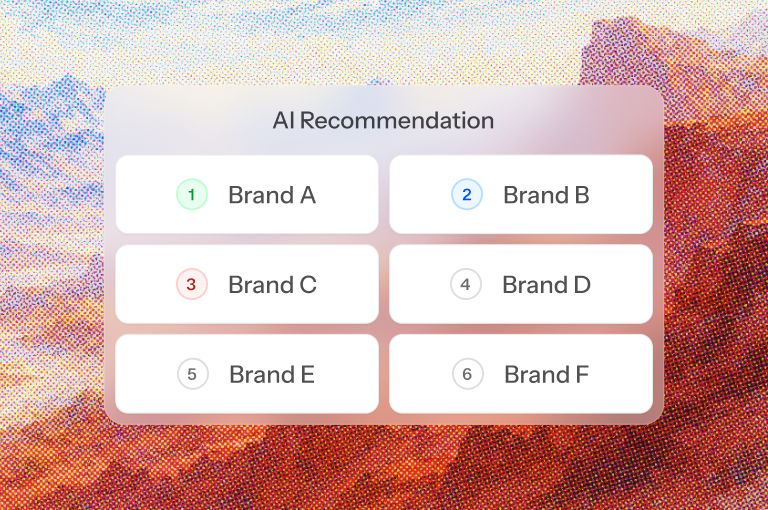
This isn't random. There are specific, fixable reasons why Shopify products get left out of AI-generated recommendations. Most stores have more than one of them.
The short answer
AI systems select products through a two-step process: first retrieving relevant content from across the web, then generating a response using the retrieved information. Your product can fail at either step.
Retrieval failure: AI couldn't extract clear information about your product from your page. It may have read your page and found insufficient structured detail, or it may have skipped it altogether. Your product didn't make the pool AI drew from when building its answer.
Authority failure: AI retrieved some information about your product but didn't have enough consistent, corroborated signals about your brand to name it confidently. Other brands had stronger, clearer signals. Yours got passed over.
Both failures look the same from the outside: you're not in the answer. But the fix is different depending on which failure you have.
Why retrieval fails for most Shopify product pages
AI is looking for specific information when it reads a product page. If that information isn't there, or isn't clearly structured, the page gets partial credit at best.
Here's what AI needs to extract from a product page:
- What is this product, in concrete terms?
- What does it do, specifically?
- Who is it for, and in what situation?
- What's different about it compared to alternatives?
- What do customers say about it?
Most Shopify product pages fail at least two of these. The most common failure modes:
Descriptions that lead with brand story instead of product facts. "Born out of a passion for clean living..." tells AI nothing extractable about the product. If the first paragraph doesn't clearly state what the product is and who it's for, AI has already started skipping.
Attribute stacks with no specifics. "Premium, lightweight, and luxurious" gives AI nothing to work with. Specific attributes do: "25g protein per serving, no artificial sweeteners, third-party tested for heavy metals." AI extracts facts, not adjectives.
No FAQ structure on the page. AI builds answers from question-answer patterns. A product page with even a basic FAQ block (what's in it, who it's for, how it compares to X, what results to expect) is substantially more likely to be retrieved for buyer queries than one without.
Inconsistent category language. If you call your product "running shoes" on one page, "performance footwear" on the collection page, and "athletic sneakers" in your About description, AI can't build a clean category model for your brand. Consistency is a retrieval signal.
Why authority fails even when retrieval works
Retrieval getting your product into AI's information pool is necessary but not sufficient. If other brands have stronger authority signals, AI will name them and leave yours out, even if it read your pages.
Here's a specific scenario that happens often: a buyer asks Perplexity for "best moisturizer for combination skin." Perplexity's citations are Healthshots, Vogue UK, mindbodygreen, and Harper's BAZAAR. The brands it recommends are the ones those editorial sources have written about. Your product may be equally good, or better. If it hasn't appeared in the publications AI treats as category authorities, it won't be in the answer.
AI builds its authority model for a brand from multiple sources: your own website content, third-party editorial coverage, review sites, press mentions, retailer listings. A brand with consistent, corroborated signals across those sources gets named. A brand that primarily exists on its own website doesn't.
The most common authority failures:
Inconsistent brand description across your own site. If your homepage, About page, and product pages describe your brand differently, AI is getting conflicting signals. "Clean beauty brand" on the homepage, "organic skincare company" on the About page, "natural formulas" on product pages: that's three different signals about what you are. AI resolves this kind of inconsistency by being less confident about naming you.
No third-party corroboration. Press coverage, editorial roundups, dermatologist or nutritionist mentions, expert reviews, being listed in retailer and comparison sites: these tell AI that independent sources agree you're credible in your category. A brand that only appears on its own site gives AI less to work with.
No content that demonstrates category expertise. Educational content, buying guides, and topic articles that AI can attribute to your brand are authority signals. They don't need to be high volume. A handful of well-structured pieces on topics your category buyers care about, where your brand clearly produced them, builds meaningful authority over time.
How to find out which problem you have
Run your own baseline. This takes 30 minutes and tells you exactly where your products stand.
Step 1: Open ChatGPT, Perplexity, and Google AI Overviews. Run the five queries your buyers most commonly use when looking for products in your category. The pattern is usually "best [product type] for [use case or condition]", "best protein powder for women over 40," "best stroller for city living," "best non-toxic cookware set."
Step 2: For each query, note:
- Does your brand appear in the answer?
- If it does, what does AI say about it? Is it accurate?
- Which brands do appear?
Step 3: Look at the citation sources. In Perplexity, citations are visible. Which publications are being cited? Are they beauty sites, supplement review sites, pet care publications? Those are the editorial sources AI trusts in your category. Are you present in any of them?
Step 4: Visit the product pages of brands that do appear. Compare their page structure to yours. Are their descriptions more specific? Do they have FAQ sections? Is their category language more consistent?
The pattern becomes clear quickly. Most Shopify brands find they're absent from AI answers entirely, and that the absence is most concentrated in categorical queries ("best [product] for [use case]") rather than brand-name searches. That's where the AEO gap lives.
The fix starts with two things
Once you know which failure you have, the work splits clearly.
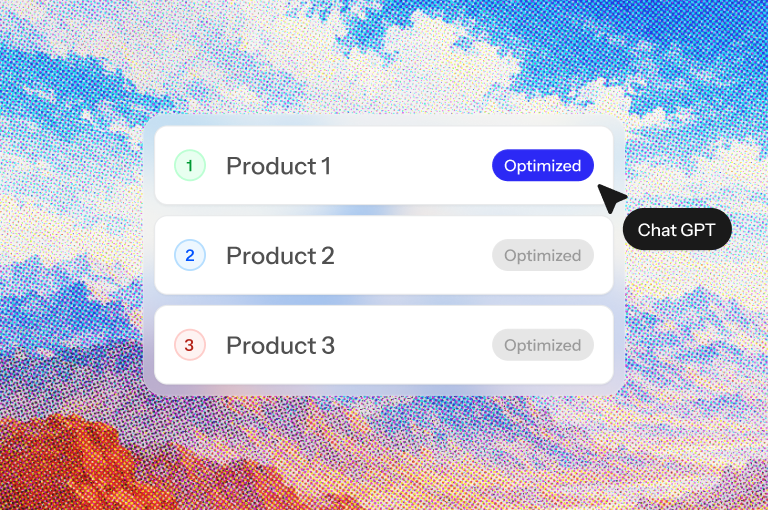
For retrieval failure: Start with your top 5 product pages. Rewrite descriptions to lead with concrete product facts rather than brand story. Add specificity to every attribute claim. Add a basic FAQ block to each page (four to six questions covering fit, ingredients or materials, use case, and common comparisons). Check Product schema implementation. These changes are visible to AI within 4-8 weeks.
For authority failure: Start with brand consistency across your own site. Open your homepage, About page, and three product pages side by side. Align the language: same description of what the brand is, same category framing, same target audience. Then map which editorial sources AI cites in your category and consider what it would take to earn mentions in those publications: product samples to editors, expert quotes, press outreach, review site submissions.
Most brands have both problems to some degree. Retrieval is faster to fix and shows results sooner. Authority is slower but has more durable impact. A full AEO diagnosis of your Shopify store tells you which to prioritize and in what order.
For a comprehensive breakdown of how the full optimization process works, see AEO for Shopify: The Complete Guide.
Frequently asked questions
My products do show up sometimes. What does inconsistent AI visibility mean?
Inconsistent visibility usually means you have partial retrieval success: AI can sometimes extract enough information from your pages to name you, but not consistently. This often comes from product pages with varying structure quality. High-priority pages (bestsellers, high-margin products) may be well-structured while others aren't. It can also mean you have some editorial mentions in your category but not enough for reliable authority. Standardizing your page structure and building more consistent brand signals removes the inconsistency.
Does paid advertising help AI visibility?
No. AI systems use organic web content, not paid placement signals, to construct recommendations. Ad spend has no effect on AI retrieval or authority. This is one of the reasons AEO has become a distinct discipline: the levers are different from paid and from SEO.
We have lots of reviews. Why doesn't that help?
Customer reviews are an authority signal, but only if AI can read them. Many Shopify review implementations load via JavaScript, which some AI crawlers can't fully process. Verify your reviews are in the page's static HTML, not rendered dynamically. Also: reviews alone aren't sufficient. They need to be accompanied by strong retrievability signals in the product description itself.
How long before we see improvement?
Retrievability improvements, rewritten descriptions, FAQ blocks, schema, typically show in AI answers within 4-8 weeks as AI systems re-index your pages. Authority improvements take longer: 8-16 weeks is realistic for brand consistency changes, longer for editorial coverage to accumulate. The baseline check tells you which to prioritize.
Does having a blog help?
A blog with expertise content builds authority signals over time. But it's not the first thing to fix. Product page structure and brand consistency have faster, more direct impact on whether your products appear in AI recommendations. Once those are in good shape, expertise content extends your authority to query types you couldn't otherwise reach.
The gap between your Google rankings and your AI visibility is real, and it's widening as more buyers start their product research in AI systems before visiting search engines. The fix starts with understanding exactly where your products are failing in the AI selection process.
Uncover deep insights from employee feedback using advanced natural language processing.
Get your content health score across ChatGPT, Perplexity, Gemini & Claude in 60 seconds.
Blogs
.avif)